Shandong Hongyao Packing Co., Ltd. It is a production, sales trading integrated company. Our company specializing in disposable tableware manufacture and sale for more than 20 years.


One-stop solution

We have our own factory and could produce different kinds and materials of food container. The mold from one compartment to multi-compartment for selection also trade variety of disposable tableware, such as soup bowl, tray, cup, sauce container, biodegradable corn starch things, sugarcane, meal boxes, straws, etc.

Based on the latest industry trends and customer requirements, we provide good products and services and value-added services. Our excellent customer service has greatly improved our customer satisfaction and also enhanced our brand loyalty.


They are a durable and cost-effective alternative for food takeout, and when paired with the appropriate plastic lids, they provide a spill-proof and leak-proof solution.
Takeout and to-go options have been trending up for some time, and it's worthwhile to consider embracing what guests are moving towards. Manufacturers have continued to be innovative with new packaging offerings including a variety of different styles, shapes, colors, and materials. Now there are more choices than ever for to go containers, and it's ideal to use packaging that matches your food and drinks offering with both functionality and style.


Single-use principle

Plastic food container operates on the single-use principle, which means that once it has served its purpose, it is discarded. This reduces the possibility of pathogen transfer from one user to another, as would be the risk with improperly cleaned reusable tableware. It ensures that each individual gets a clean plate free of remnants from prior uses.

Plastic food container reduces the risk of foodborne illnesses precipitating through cross-contamination. For example, in buffet-style meals where everyone is sharing communal dishes, having disposable spoons or forks for each serving dish can prevent the transfer of germs between different people.


1. Extrusion blow moldingin extrusion blow molding a round, hollow tube or parison is formed by an extruder. A mold cavity, composed of two halves, closes around the parison and pinches off one end. Compressed air expands the parison to conform against the cold mold cavity walls. When sufficiently cool, the mold opens and the container is removed and trimmed of excess plastic or flash. Flash, a basic characteristic of extrusion blow molding, is formed when the parison is pinched off by the mold. Since most resins can be reprocessed, the flash is not wasted but is used as "regrind." wall distribution, thickness and weight can be controlled by parison programming. While the parison is extruded, programming changes in the relation of mandrel and die can be used to shift material from heavier, stronger areas to lighter, weaker areas. This method aids significantly in maximizing container performance and minimizing container weight and cost.


2. Injection blow moldingthe process of injection blow molding is used for the production of hollow plastic objects. Injection blow molding is performed in basically three stages. At the first stage, melted plastic is injected into a mold cavity to produce a preform parison. The preform is shaped like a test tube, but with a molded screw finish at the top. The preform is then transferred to the second, blow-molding stage. Air is blown through a core pin to expand the preform against a cold mold cavity. The container is then transferred to the third station for ejection. Two main types of processes exist:
● One-step injection molding – The melted polymer is injected into the final shape of the container in a cold mold, it's then released.
● Two-step injection molding – The first step in the injection of melted plastic in a mold, resulting in the creation of a preform. The cold preform is then taken onto another machine, enclosed in a mold, heated, stretched with a pin to reach the desired length and then blown in the shape of the chosen mold.


3. Stretch blow moldingstretch blow molding uses either the injection or extrusion blow molding process as a basic foundation. In either case, a preform parison is molded and then transferred to a blow molding cavity. The parison is stretched biaxially during blow molding to orient and align the molecules. This orientation improves the gas barrier, stiffness, clarity and impact strength of the container. As a result, containers can be reduced in weight. Resins which can be stretch blow molded include PET, PVC and polypropylene.


4. Injection moldinginjection molded containers can be straight sided or tapered, narrow or wide mouth shapes such as jars, tubs and vials. Material is injected into a cavity where pressure forces the resin to conform to the mold body. Containers are capable of holding to a tighter dimensional tolerance, and are more uniform in wall distribution. A wide variety of resins can be processed via the injection molding process, the most popular being polypropylene, styrene and polyethylene.


5. Multi-layer bottles - Co-extrusionthe newest of bottle blowing technology, co-extruded multi-layered bottles bond various plastic resins together with tie layers to produce bottles with barrier and heat-stable qualities suitable for use with hot-filled, hermetically sealed food products. Currently EVOH (ethylene vinyl alcohol) is used as the central layer because of its barrier properties. Polypropylene or polyethylene is used as the inner and outer walls because of their heat tolerance and clarity. The hot-fill process creates a vacuum which will draw in the side walls of a plastic food container. This effect must be compensated for in bottle design, either by using an oval shape which will cloak the indentation or by employing strengthening ribs or panels in a round bottle design.

Food-Grade Polypropylene

Polypropylene can be manufactured as food-grade material, specifically designed and tested to meet stringent safety standards for food contact. Food-grade polypropylene ensures that the plastic does not leach harmful substances into the food, maintaining the integrity and safety of the packaged or stored items.

01

Non-Toxic and BPA-Free

Polypropylene is considered a non-toxic plastic and does not contain Bisphenol A (BPA) or phthalates, which are known to pose health risks. This makes it a preferred choice for food applications, as it does not introduce harmful chemicals into the food.

02

Polypropylene exhibits excellent heat resistance, allowing it to withstand high temperatures without deformation or releasing toxic fumes. This feature makes it suitable for use in microwave-safe food containers, ensuring that the plastic remains stable and safe when exposed to heat.

03

04

05


一次性塑料容器盒


An excellent plastic food container should have a secure and tight-fitting lid to prevent leaks and spills. Preserve food freshness by creating a secure, airtight seal when using plastic food containers. Confirm that lids fit snugly, forming a seal that prevents air from entering. This step is crucial for stopping oxidation, which causes spoilage of food and loss of flavors.

For meals with different components, opt for sectioned disposable food packaging boxes. This not only keeps flavors separate but also facilitates easy portion control. Sectioned containers are handy for bento-style meals or storing ingredients separately for later use.

Stay organized by labeling and dating each container. This practice ensures you use items within their recommended storage duration and helps identify contents without opening the container. Employ water-resistant labels and a permanent marker for clarity.


It is best to consume food stored in plastic food containers within 2–3 days to ensure freshness and safety. However, there are some guidelines to follow for specific types of food:


1. Cooked leftovers: Leftovers should be refrigerated promptly and consumed within 3–4 days. If the intention is to store them for a longer period, freezing is a better option. When reheating, make sure the food reaches an internal temperature of 165 degree F (74 degree ) to kill any potential bacteria.


2. Deli meats and prepared salads: These foods should be consumed within 3–5 days of purchase or opening the package. It is important to check for any signs of spoilage before consuming.


3. Dairy products: Milk, yogurt, and cheese should be consumed before their expiration dates. Once opened, they should be used within 3–7 days, depending on the product and storage conditions.


4. Raw meat, poultry, and fish: These perishable items should be consumed within 1–2 days of purchase or stored in the freezer. If the intention is to store them in the refrigerator, it is best to place them on the bottom shelf, away from other ready-to-eat foods, to prevent cross-contamination.


5. Canned foods: Canned foods have a longer shelf life and can be safely consumed past their expiration dates if the can is not damaged or bulging. However, it is recommended to consume them within 1–2 years for optimal taste and quality.


Shandong Hongyao Packing Co., Ltd.It is a production, sales trading integrated company.Our company specializing in disposable tableware manufacture and sale almost 30 years.
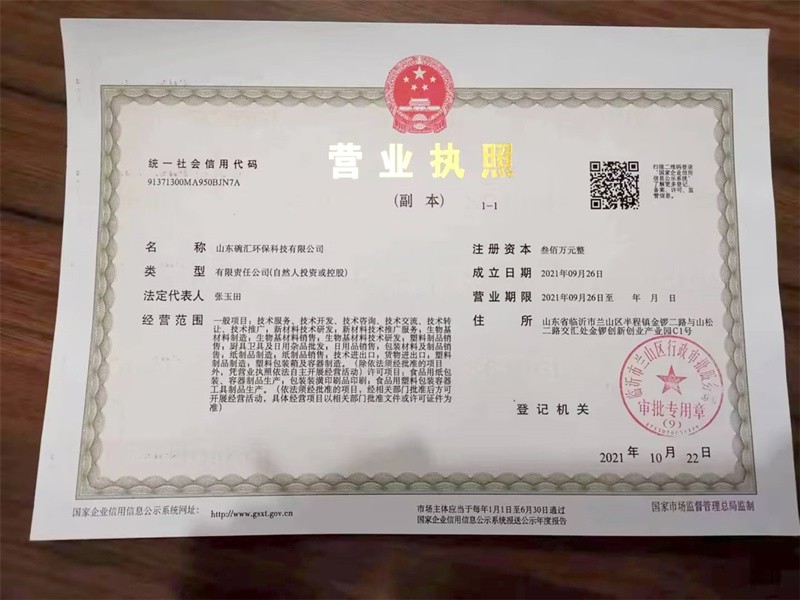
Our factory,Shandong Wanhui Environmental Protection Technology Co., Ltd.,could produce different kinds and materials of food container, from one compartment to multi-compartment for selection.All kinds of items you can choose,PP disposable tableware, lunch boxes, packaging boxes and other series of catering packaging products,and also soup bowl, tray, cup, sauce container, biodegradable corn starch things, sugarcane, meal boxes, straws, etc.

productcate-1-1
 
productcate-1-1
productcate-1-1
productcate-1-1
productcate-1-1
productcate-1-1
productcate-1-1
productcate-1-1
 
productcate-1-1
productcate-1-1
productcate-1-1
productcate-1-1
productcate-1-1
productcate-1-1
productcate-1-1
productcate-1-1
productcate-1-1
productcate-1-1
productcate-1-1
productcate-1-1


A: How to recycle plastic pots, tubs and trays. Use left over washing up water to rinse your plastic pots and tubs before recycling. Left-over food residue can contaminate other recyclables. Labels and lids can all be left on but plastic film and absorbent pads must be removed and put in the waste bin.

A: Even if it's sorted properly, black plastic is tricky because it cannot be dyed other colors when making new products, limiting its recycling potential. That said, all other color plastic take-out containers – clear, white, green, purple, orange, rainbow – ARE recyclable.

A: Polypropylene (PP) – the material used in our most popular takeaway containers. To answer a common question up front, YES, they are recyclable, falling into the recycle 5 code classification.

A: In general, the safest choices for food use are numbers 1, 2, 4 and 5. The American Academy of Pediatrics recommends avoiding plastic containers with codes 3, 6 and 7. Plastic number 3 contains vinyl or polyvinyl chloride (PVC), 6 has polystyrene and 7 can contain various plastics, such as Bisphenol A (BPA).

A: PP and PE plastic food containers are both highly hygienic plastics that are safe to use. PP material has food-grade plastics that meet national standards, so it can be used for food packaging.

A: If I'm going the plastic route for some of my containers, I always try to verify that I'm using a "safe" option, meaning it's comprised of a material that won't leach chemicals into the foods and liquids we store in them. BPA-free plastic is the first thing to look for, but this isn't always a guarantee.

A: You'll find that PET, PP, and HDPE are the better options. You should also make sure that the meal prep containers you choose are labeled as being: BPA-free. Microwave-safe.

A: They are a durable and cost-effective alternative for food takeout, and when paired with the appropriate plastic lids, they provide a spill-proof and leak-proof solution.
Takeout and to-go options have been trending up for some time, and it's worthwhile to consider embracing what guests are moving towards. Manufacturers have continued to be innovative with new packaging offerings including a variety of different styles, shapes, colors, and materials. Now there are more choices than ever for to go containers, and it's ideal to use packaging that matches your food and drinks offering with both functionality and style.

A: If you're dead set on reusing your take-out containers, it's best to keep cold or room-temperature things in them—this is best practice with any plastic container, really, whether it's marketed as "reusable" or not. You'll also want to avoid anything acidic or saucy, which can further encourage leaching.

A: Plastic food containers are available in numerous shapes, sizes, and designs to deal with an extensive variety of culinary wishes, together with: Takeout containers- these packing containers are frequently used by eating places and meal companies to bundle and supply warm or bloodless meals.

A: You can source a bamboo dish drying rack for less than $10, then just place it inside your kitchen cabinets — or on top of the counter, if you want to keep your containers within easy reach. For a super simple way to keep plastic containers of varying sizes neat and tidy, turn to cloth storage bins.

A: Two main types of processes exist: One-step injection molding – the melted polymer is injected into the final shape of the container in a cold mold, it's then released. Two-step injection molding – the first step in the injection of melted plastic in a mold, resulting in the creation of a preform.

A: When exposed to high temperatures, food-safe PET can leach the contaminant, antimony, into your foods. On the other hand, cold foods such as salads and wraps can be packaged and stored into PET containers. PET Temperature Limits: Up to 120 degree F.